555 Timers are fun and a great way to start learning electronics
KNIGHT RIDER Circuit
This circuit mimics the lights in knight rider's car. They flash one at a time chasing each other.
Overview
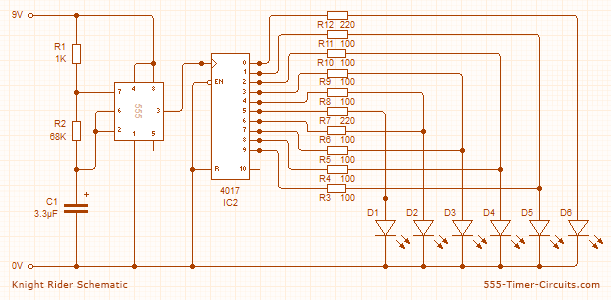
In the Knight Rider circuit, the 555 is wired as an oscillator (Astable mode). The output of the 555 is directly connected to the input of a 4017 decade counter.
The input of the 4017 counter is called the CLOCK line. The 10 outputs Q0 to Q9 become active, one at a time, on the rising edge of the waveform from the 555. Each output can deliver about 20mA but a LED should not be connected to the output without a current-limiting resistor (100R or 220R).
Using six 3mm LEDs, the display can be placed in the front of a model car to give a very realistic effect. The same outputs can be taken to driver transistors to produce a larger version of the display.
Schematic
This circuit consumes 22mA while only delivering 7mA to each LED. The outputs are “fighting“ each other via the 100R resistors (except outputs Q0 and Q5).
Video
This video walks you through building this circuit using a breadboard.